Category: Uncategorized

  • E85 Fuel in India: What It Means for the Future of Ethanol Production

    E85 Fuel in India: What It Means for the Future of Ethanol Production

    The recent launch of E85 Fuel in India could redefine far more than the country’s transportation sector. It has the potential to reshape ethanol demand, influence future investments in production infrastructure, and accelerate the evolution of India’s biofuel industry. As the nation prepares for higher ethanol blends, one question becomes increasingly important: Is India’s ethanol production ecosystem ready for what comes next?

    What Is E85 Fuel and Why Is India Introducing It Now?

    India’s launch of E85 isn’t just another fuel announcement; it’s a shift in strategy. After E10 and E20, ethanol is stepping out of its role as a blending agent and into a starring one: a strategic fuel capable of reshaping transportation, energy security, and domestic fuel demand. E85 doesn’t mark another milestone. It marks the start of a new chapter.

    Understanding E85 Fuel and Flex-Fuel Vehicles

    E85 is a high ethanol blend, up to 85% ethanol and 15% gasoline, built for flex fuel vehicles (FFVs), which read the blend automatically through onboard sensors and adjust combustion accordingly.

    But E85 is more than a fuel blend. It’s the foundation of a mobility model where ethanol becomes a primary fuel, not a supplement. For India, FFVs are the mechanism that makes that shift possible.

    India’s Transition from E20 to E85

    E20 proved ethanol blending could scale. E85 raises the stakes, demanding a full flex fuel ecosystem of compatible vehicles, fuel infrastructure, and reliable ethanol supply. It’s not just the next blend; it’s where India’s ethanol ambitions meet the limits of its infrastructure.

    The Government’s Long-Term Biofuel Vision

    E85 fits into India’s broader push to cut crude oil dependence, strengthen energy security, and support cleaner mobility. But its real significance lies in execution. If India can successfully scale up E85, it will strengthen fuel diversification and create a stronger role for domestic ethanol in the energy mix. Its success will depend on how effectively policy, industry, and technology evolve together.

    Where Does E85 Actually Stand in India Today?

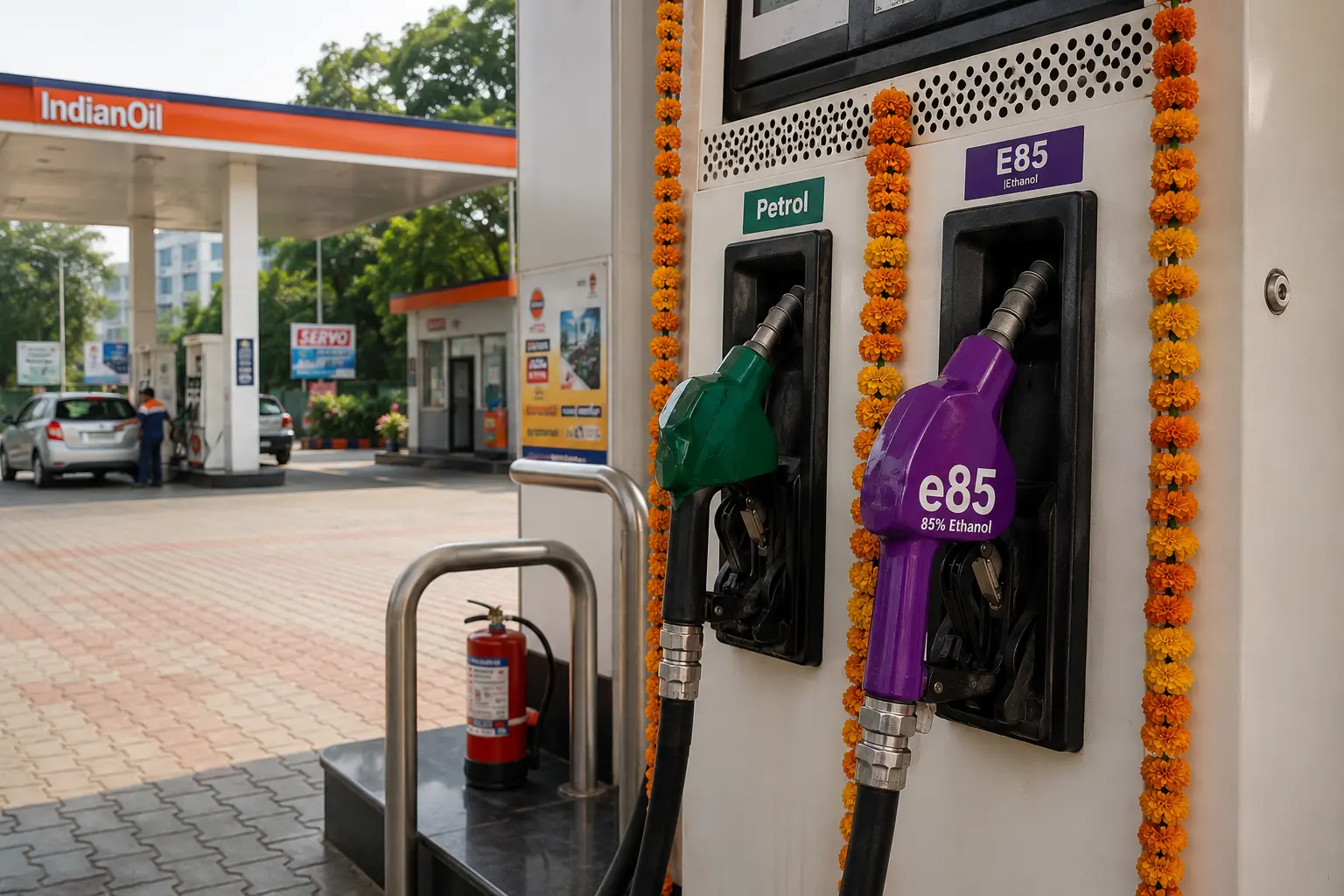
    E85 has moved beyond the proposal stage, with its commercial launch on June 5, 2026, at 48 retail outlets across Delhi-NCR, Mumbai, Pune, and Nagpur. Recognised by the Bureau of Indian Standards as a monofuel for flex-fuel vehicles, it now has a formal regulatory foundation. However, nationwide adoption remains limited.

    The government plans to expand to 500 outlets by December 2026 and 5,000 by the end of 2027. While E85-compatible two-wheelers are already available, passenger FFVs remain scarce. Expanding fuel infrastructure and vehicle availability together will be critical for large-scale adoption.

    Why Did India Feel the Need to Launch E85?

    India introduced E85 not as a routine fuel upgrade, but as a strategic response to rising fuel demand, crude import dependence, and the need for cleaner mobility. It gives the country a way to reduce oil exposure, strengthen energy security, and expand the role of domestic ethanol in transport.

    Reducing Dependence on Imported Crude Oil

    India’s heavy reliance on imported crude makes it vulnerable to price shocks and supply disruptions. E85 helps reduce that exposure by replacing a larger share of petrol with domestically produced ethanol, easing pressure on foreign exchange reserves.

    Strengthening India’s Energy Security

    E85 supports a more secure fuel system by increasing the use of homegrown ethanol from sugarcane, maize, grains, and other approved feedstocks. That makes transport fuel less dependent on imported fossil fuels.

    Accelerating the Transition to Low-Carbon Mobility

    E85 offers an immediate way to lower the carbon intensity of road transport. It does not replace every clean mobility solution, but it adds a practical decarbonization pathway India can deploy now.

    Supporting India’s Biofuel Roadmap

    E85 fits directly into India’s broader biofuel strategy. By pushing higher ethanol use, it strengthens the case for flex-fuel mobility and a more diversified transport fuel mix. This transition also increases the importance of scalable and resource-efficient ethanol production technologies.

    Strengthening Rural and Agricultural Value Chains

    Higher ethanol demand also creates new opportunities for farmers, distilleries, and agro-processors. In that sense, E85 is not just a fuel policy; it is an economic signal for the wider biofuel ecosystem.

    How Could E85 Reshape India’s Ethanol Demand Over the Next Decade?

    India’s E85 shift could turn ethanol from a blending ingredient into a strategic fuel, and that changes everything. E85 multiplies demand fast, forcing the industry to produce more ethanol, more reliably, than E20 ever required. Sugarcane alone won’t cover it; maize, damaged grains, surplus rice, and 2G biomass must all enter the mix.

    But volume without continuity fails. E85 demands year-round supply, stronger storage, smarter logistics, and plants that run efficiently across feedstocks. The next decade’s winners will be producers who scale without wasting water, steam, energy, or time.

    Is India’s Current Ethanol Production Ecosystem Ready for E85?

    India’s ethanol industry has built a solid foundation, expanding distillery capacity, supportive policies, and diversified feedstocks like sugarcane, maize, and damaged grains. But E85 demands more. Capacity constraints, regional imbalances, weak logistics, and seasonal feedstock swings threaten future supply. Growth now hinges on expanding capacity, modernizing distilleries, strengthening logistics, and boosting efficiency, building a reliable ethanol supply for India’s E85 future.

    The Consumer Economics of E85: What It Really Costs to Drive

    For consumers, the key question is whether E85 costs less to drive. While E85 is priced nearly ₹20 per litre below petrol, ethanol contains about 30% less energy, reducing fuel economy in conventional flex-fuel vehicles. As a result, cost per kilometre, not pump price, determines savings. E85 remains economical only if the price gap is wide enough to offset lower mileage, with proposed GST reductions potentially improving its value. Hybrid flex-fuel vehicles can partly overcome this efficiency loss, though they are not yet widely available in India. Ultimately, E85’s economic success depends on sustained pricing advantages supported by stable supply and policy.

    The Technologies Driving India’s Ethanol Expansion

    India’s move toward E85 will require more than added ethanol capacity; it will require more efficient ethanol plants. As demand grows, producers will need technologies that reduce steam use, improve recovery, lower operating costs, and deliver fuel-grade ethanol consistently. That is where modern process engineering becomes critical.

    Energy-Efficient Evaporation

    Evaporation is ethanol production’s biggest energy drain, and conventional systems only get costlier as output rises. SED’s patented LTE® (Low Temperature Evaporation) recovers and reuses thermal energy within the process, cutting steam use so production can scale without costs following.

    Distillation and Dehydration for Fuel-Grade Ethanol

    As India moves toward higher blends like E85, purity is non-negotiable—small variations can break fuel performance and compliance. Advanced distillation with molecular sieve dehydration delivers fuel-grade consistency, higher recovery, and lower energy losses: better yield, better quality, stronger performance.

    Process Integration for Higher Plant Efficiency

    Isolated systems bleed efficiency. Integrating evaporation, distillation, dehydration, heat recovery, and utilities into one operation raises thermal efficiency and throughput—without expanding the footprint.

    Automation and Digital Control

    Manual operation can’t match the control higher volumes demand—the gap shows up as downtime and lost output. Automation and predictive monitoring keep performance stable and quality consistent. It’s no longer optional; it’s the competitive edge.

    Efficiency Will Define the New Era of Growth

    The winners in India’s ethanol industry won’t be the biggest plants—they’ll be the smartest. Lower steam use, better water management, higher recovery: this is what separates the next generation from the last. SED’s LTE® and integrated process design aren’t building bigger plants. They’re building smarter, cleaner, more cost-efficient ones.

    Challenges That Could Influence India’s E85 Journey

    Launching E85 is a bold step, but policy alone is not enough. Success depends on a coordinated push across agriculture, manufacturing, infrastructure, and the auto sector. The real challenge is not introducing E85; it is building an ecosystem that can sustain it.

    • Stable feedstock supply- Sugarcane, maize, damaged grains, and other approved feedstocks must remain available year-round. Seasonal swings, competing uses, and price volatility can quickly disrupt supply.
    • Distribution readiness- Ethanol production alone is not enough. Storage, transport, blending, and retail infrastructure must scale with demand.
    • Faster flex-fuel adoption– E85 growth depends on more flex-fuel vehicles, stronger consumer awareness, and wider OEM support.
    • Investment confidence- Long-term expansion needs predictable policy, market stability, and investor confidence.
    • Policy agility– As biofuel rules evolve, producers, fuel suppliers, and automakers must adapt quickly to new blending targets and sustainability norms.

    What Can India Learn from Global E85 Leaders?

    Brazil and the United States show that E85 success is never just about fuel—it is about industrial readiness. High-ethanol adoption depends on policy, flex-fuel vehicles, feedstock security, production scale, and efficient processing working together. India’s path will differ, but the message is clear: blending targets mean little without manufacturing capacity to back them. The real challenge is not copying global models, but building an ethanol ecosystem that can scale fast, conserve resources, and withstand long-term demand at national industrial scale.

    What E85 Means for the Future of Ethanol Production in India

    India’s E85 ambition marks the beginning of a more mature ethanol economy, one where competitiveness will depend as much on manufacturing excellence as on production capacity.

    • Smarter Manufacturing, Stronger Growth- The next wave of growth will reward efficiency over capacity. Producers that boost productivity, reduce waste, and adopt advanced technologies will lead the market.
    • Sustainability as a Competitive Edge- Efficient use of water, energy, and feedstocks will separate industry leaders, helping them meet regulatory, environmental, and market demands.
    • India’s Global Biofuel Opportunity- E85 can position India as a global biofuel leader, strengthening energy security, industrial competitiveness, and the transition to cleaner fuels.

    E85 is not the destination—it is the beginning. India’s long-term leadership will depend on the choices it makes today in technology, efficiency, and manufacturing excellence.

    Frequently Asked Questions (FAQs)

    What is E85 fuel and how is it different from E20?

    E85 fuel is a high-ethanol blend made up of 85% ethanol and 15% petrol. It is designed for flex-fuel vehicles that can automatically adjust to different fuel blends without manual intervention.

    Why was E85 fuel introduced in India?

    The launch of E85 supports lower crude oil dependence, stronger energy security, reduced transport emissions, and greater use of domestically produced biofuels.

    How will E85 fuel affect ethanol production in India?

    Wider adoption of E85 will significantly increase ethanol demand, pushing producers to expand capacity, improve efficiency, and invest in advanced process technologies.

    Is India’s ethanol industry ready for large-scale E85 adoption?

    The industry has made progress, but large-scale E85 adoption will require more capacity, stronger feedstock availability, and highly efficient production systems.

    Will E85 replace E20 in India? E85 will move biofuels beyond blending targets and into a larger, technology-driven industry shaped by investment, scale, and long-term growth.
  • Closing the Loop: How SED is Enabling a Water-Independent Textile Industry

    Closing the Loop: How SED is Enabling a Water-Independent Textile Industry

    Reclaim. Reuse. Reimagine – Textile’s Water Future with SED

    Vimarsh Verma – Director Operation, SED, Mohali, Punjab, India

    Haresh Shandilya – Research and Process Engineer, SED, Mohali, Punjab

    Water is the lifeblood of the textile industry. From dyeing to bleaching, printing to finishing, every stage relies heavily on it. Yet, with freshwater scarcity worsening and environmental regulations tightening, the industry now faces a critical question:

    How do we continue to innovate and grow without exhausting our water resources?

    The answer lies in circular water recovery. What if textile manufacturers could eliminate dependence on external water intake and operate in a closed-loop, sustainable system? With SED’s Smart Energy Driven Solutions for Textile Effluent, that future is not only possible – it is already here.

    From Effluent to Distilled-Quality Water

    Every textile unit generates large volumes of effluent, rich in dyes, salts, and chemicals. Traditionally, this is considered waste, requiring costly treatment before disposal.

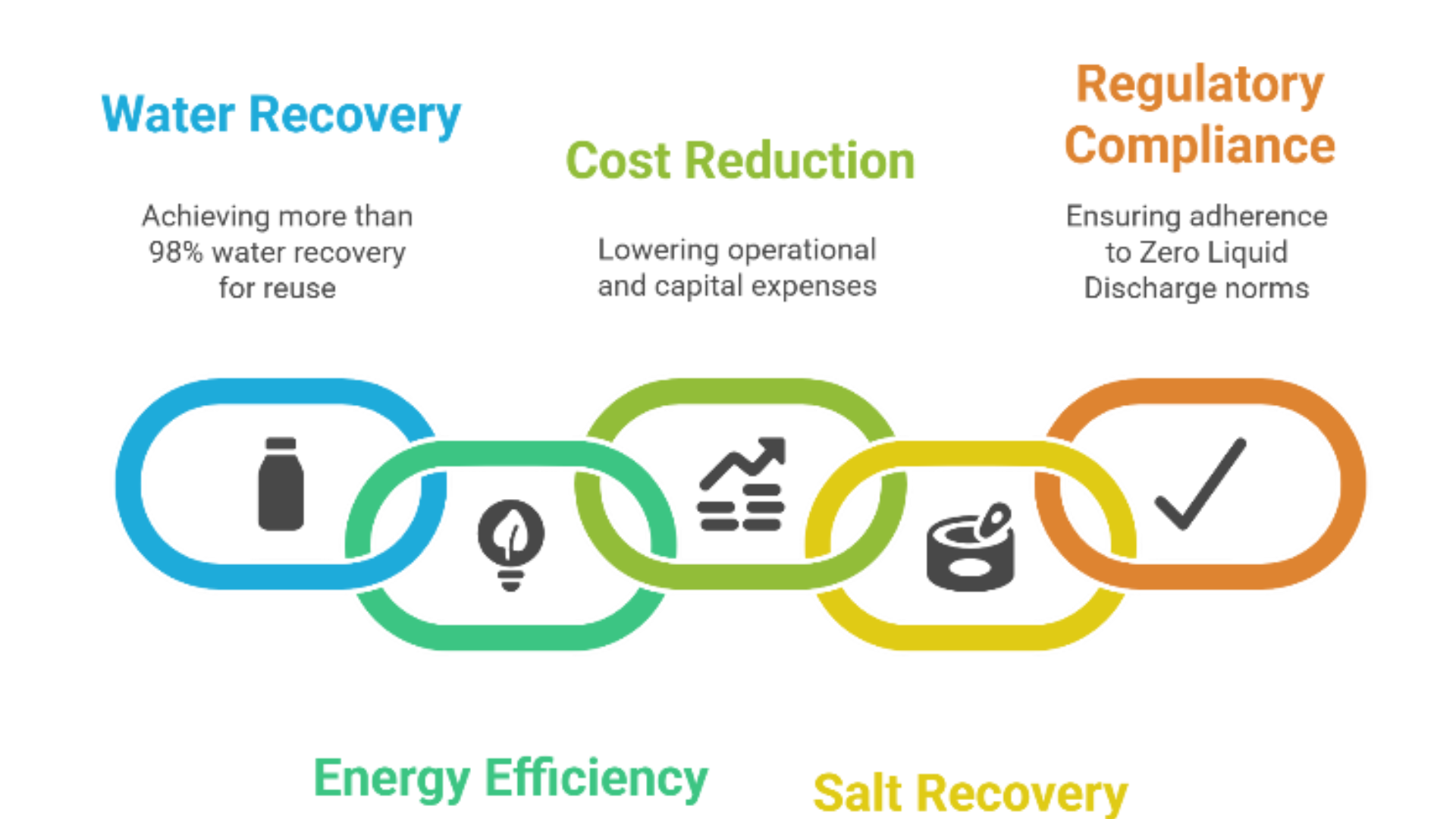
    SED changes this perspective. With their effluent recovery system, more than 98% of pure water can be recovered directly from textile wastewater. The recovered water is distilled-equivalent quality, making it perfectly suitable for reuse in even the most sensitive textile processes.

    This innovation redefines wastewater:

    • Effluent is no longer waste – it becomes the main source of clean process water.
    • Circular loop established – recovered water is fed back into the textile process.
    • Groundwater dependence reduced drastically – industries can thrive without external water intake.

    A Win-Win for the Industry
    By adopting SED’s solution, textile manufacturers gain benefits across operations, compliance, and sustainability:

    • Operational Reliability – A steady, secure supply of pure water for all process needs.
    • Regulatory Compliance – Meet or exceed strict discharge norms with ease.
    • Cost Advantage – Reduced expenditure on water procurement and waste management.
    • Sustainability Leadership – Strengthen your brand’s image as a green, responsible manufacturer trusted by global buyers.

    From Problem to Solution

    What was once a major challenge – wastewater – is now the key to building a sustainable, resilient textile industry. By adopting SED’s solution, textile manufacturers don’t just solve their wastewater issue; they unlock new efficiencies and long-term benefits.

    The Future is Circular

    The message is clear: the textile industry of tomorrow will no longer depend on freshwater intake it will thrive on smart recovery and reuse.
    With SED’s advanced solutions, the textile industry is entering a new era where water challenges are transformed into opportunities. A self-sufficient, circular water model ensures reduced dependency, lower costs, and enhanced sustainability. Truly, a win-win situation for business, environment, and society.

  • A New Vision for Wastewater in the Textile Industry

    A New Vision for Wastewater in the Textile Industry

    Water has always been the textile industry’s greatest ally and its
    greatest challenge. Every meter of fabric, every shade of dye,
    every finish owes its existence to water. Yet as freshwater
    resources decline and regulatory pressures rise, the textile industry
    faces a pressing reality: the traditional “use-and-dispose”
    water model is no longer viable. At Spray Engineering Devices
    Limited (SED), we believe the future lies not in consuming more
    water, but in recovering, reusing, and reimagining what is already
    at hand. Wastewater, often dismissed as an unwanted
    byproduct, can in fact become the cornerstone of a circular,
    resource-efficient economy.

    Beyond Treatment: Towards a Circular Water Economy

    Conventional effluent treatment has always focused on compliance, treating wastewater to meet discharge norms. While necessary, this approach overlooks the true potential of effluent as a resource reservoir.

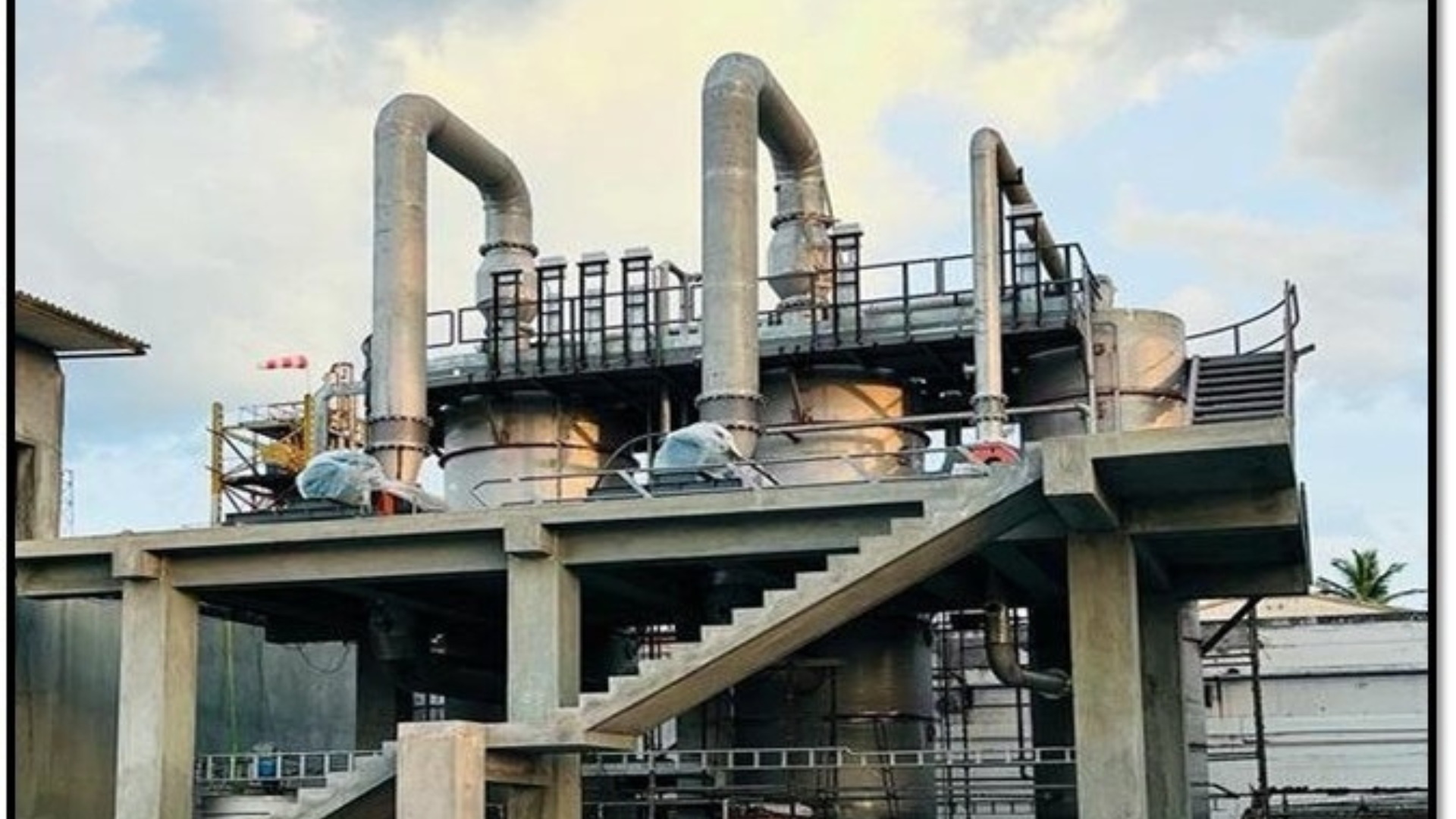
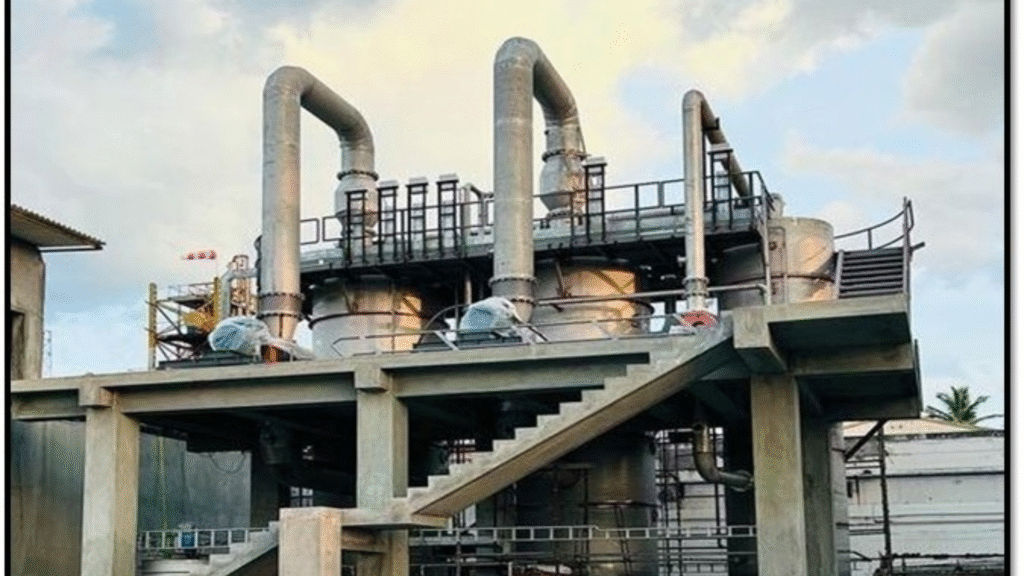
    SED’s philosophy is different. With our advanced MVR Based Low Temperature Evaporator (LTE®), wastewater is no longer just treated — it is transformed:

    • Clean Water Recovery – Up to 99% of effluent is reclaimed as high quality water in the form of condensate with TDS less than 200 ppm suitable for reuse in dyeing and finishing processes. 
    • Salt Recovery – Salts such as sodium sulfate are extracted, purified, and reintroduced into production cycles, reducing raw material costs.
    • Dye Concentration – Used dyes can be reclaimed through concentration and recovery
    • Energy Reuse – Heat energy, often wasted in conventional systems, is captured and reintegrated into plant operations.

    In this model, nothing is wasted. Water, salts, dyes and energy flow back into the system, creating a self-sustaining loop.

    Case in Point: Arthanari Loom Center (ALC), India

    A leading example of this transformation can be seen at Arthanari Loom Center (ALC) in Salem, Tamil Nadu. Serving iconic global brands such as ZARA, GAP, and Ralph Lauren, ALC had to meet both customer sustainability expectations and strict Zero Liquid Discharge regulations from Central Pollution Control Board & Tamil Nadu Pollution Control Board.

    The challenges were formidable:

    • High Total Dissolved Solids (TDS), making direct discharge impossible.
    • High Chemical Oxygen Demand (COD) from dyes and organic sizing agents, which resisted biological degradation.
    • High Hardness, leading to scaling in process equipment and utilities.
    • Excess Chlorides, causing corrosion of pipelines and pumps while posing risks to ecosystems also.

    Traditional biological treatment methods and primary effluent plants could not adequately reduce salt loads or COD levels, leaving ALC in need of a cutting edge, reliable solution. SED’s solution was decisive. With SED’s MVR-based LTE®, ALC unlocked the hidden value in its wastewater while achieving the following key outcomes:

    Vimarsh Verma, Director – Operations, Spray Engineering Devices

    • 75% clean water recovered and fed back into dyeing and processing lines.
    • 7,000–9,000 kg of salts reclaimed daily and reused in operations.
    • 5 million kilo calories of heat energy reused every day, slashing costs.
    • Achieving full ZLD to ensure compliance with PCB regulations.
    • Cutting operation costs to 1/4 th of that of conventional systems.
    • Energy Efficiency: Reduced power consumption (20–22 kWh/m3), and negligible steam consumption with zero reliance on boiler.

    What began as a regulatory necessity became a strategic advantage. Today, ALC not only meets environmental standards but also reduces costs, enhances efficiency, and strengthens its brand as a sustainable supplier to the world’s biggest fashion retailers.

    Turning Challenges into Opportunities

    The ALC story illustrates a larger truth: wastewater is not a liability; it is a resource waiting to be unlocked. For textile manufacturers worldwide, the benefits are compelling:

    • Operational security – A steady, in-house supply of high-quality water.
    • Regulatory peace of mind – effortless compliance with global discharge norms.
    • Easy to Retrofit – Seamless integration into existing systems
    • One-Step ZLD Solution – Pure evaporation, no chemical pre-treatment
    • Less CIP &\ Higher Uptime – Maximizes productivity and profitability
    • Resource Recovery & Circular Economy – Supports sustainable operations
    • Sustainability credentials – Stronger appeal to eco-conscious brands and buyers.

    The Road Ahead: A Self-Sustaining Textile Industry

    The textile industry of tomorrow will not rely on ever-depleting freshwater reserves. Instead, it will thrive on closed-loop systems where every drop of water, every grain of salt, and every unit of energy is reclaimed and reused. SED’s mission is to make this future accessible, one textile plant at a time, across the globe. By helping manufacturers reclaim, reuse, and reintegrate resources, we are proving that wastewater is not waste at all. It is the foundation of a circular economy that benefits industry, society, and the globe alike.

  • Evaporate the Waste, Elevate the Worth: A New Era in Water Recovery

    Evaporate the Waste, Elevate the Worth: A New Era in Water Recovery

    SED’s MVR-based ZLD system maximizes resource recovery from wastewater while minimizing energy consumption and environmental impact.
    By Vimarsh Verma and Haresh Shandilya

    Introduction: Turning Challenges into Sustainable Solutions

    Across the world and especially in water-stressed regions like the Middle East, industries are facing a stark
    reality. Water scarcity is deepening, while wastewater volumes are growing. Rivers are drying, groundwater
    tables are depleting, and the cost of clean water is rising steadily.
    In this context, Zero Liquid Discharge (ZLD) is no longer a regulatory checkbox it is an urgent necessity.
    Industries today don’t just “want” ZLD they need it to survive, to sustain, and to stay future-ready. The
    challenge? Traditional systems are energy-intensive, costly, and often incapable of handling complex effluents
    efficiently.
    At SED, we’ve addressed this challenge with a powerful yet elegant solution the MVR-based Low
    Temperature Evaporation (LTE®) system. It transforms industrial effluent into high-purity water (<10 ppm
    TDS) almost as clean as distilled water without steam, chemicals, or high maintenance. Water recovery is up
    to 99%, making it one of the most efficient solutions available. But more importantly, it restores control,
    efficiency, and sustainability back into the hands of industries.

    What Makes LTE with MVR Different?

    Low Temperature Evaporation (LTE®) is a vacuum-assisted process that allows water to evaporate at just 60-70°C. When paired with Mechanical Vapor Recompression (MVR), the vapor produced is reused to heat the system making it highly energy-efficient and completely steam-free.
    This technology doesn’t just concentrate waste; it reclaims water, recovers valuable salts and chemicals, and helps industries drastically cut down operational expenses.

    Why Industries Are Switching to SED MVR-LTE®

    Here’s what makes this technology a preferred choice for sustainable ZLD:

    • Ultra-Low OPEX – Consumes only 10 – 12 kWh/m³, with no chemical pretreatment required. Feed goes directly into the system.
    • Low Temperature Operation – Reduces scaling, handles corrosive fluids easily, extends MOC life, and lowers power consumption.
    • No Boilers, No Cooling Towers – A clean and compact system that simplifies plant design by eliminating bulky utilities, significantly reducing operational costs.
    • Customizable Footprint – Can be designed in vertical or horizontal layouts to suit any industrial space.
    • Fully Automated – Runs on PLC with remote access; needs minimal, unskilled manpower.
    • More Than Water Recovery – Also recovers dyes, salts, acids, and valuable chemicals from effluents.
    • Product Concentration – Can be used to concentrate liquid glucose, buttermilk, dyes, Glauber’s salt,and more.
    • >99% Water Recovery – Achieves industry-leading water recovery efficiency, leaving virtually no liquid waste behind.
    • Handles Highly Variable Effluents – Designed to treat fluctuating flow rates and complex compositions without compromising performance.
    • Ready for a Solar Future – As solar and renewable electricity become more accessible, the system moves toward near-zero utility cost.
    • Tolerates Extreme TDS Loads – Capable of handling wastewater with TDS levels exceeding 150,000 ppm with consistent reliability

    Why Choose SED for ZLD?

    At SED, we deliver ZLD systems engineered to operate using Mechanical Vapor Recompression (MVR) technology. This innovative approach significantly reduces energy demands compared to traditional systems, making our solutions both cost-effective and environmentally sustainable. Here’s why industries rely on us:

    • Tailored Solutions: We provide bespoke ZLD designs suited to your specific industrial needs, ensuring
      optimal performance and compliance.
    • Proven Expertise: With decades of experience in water treatment technologies, we understand the
      complexities of wastewater management.
    • Innovative Technology: Our solutions are equipped with state-of-the-art equipment, such as evaporators, PTFFE (Plate Type Falling Film Evaporators), TTFFE (Tube Type Falling Film Evaporators), FCE (Forced
      Circulation Evaporators), and dryers, ensuring efficient water recovery with minimal power usage due to MVR.
    • Sustainability Focus: We prioritize energy-efficient systems that reduce your operational costs while meeting environmental targets.
    • End-to-End Support: We don’t just build and deliver we stay with you. Our clients get full-time support, complete with dedicated engineers and Operation & Maintenance (O&M) services, ensuring seamless
      operation and peace of mind.

    Industries We Serve

    Our systems are actively delivering ZLD and product recovery solutions in:

    • Textile & Dyeing
    • Distilleries (Spent Wash, Condensates)
    • Pharmaceuticals & APIs
    • Chemicals & Fertilizers
    • Municipal & Landfill Leachate
    • Food & Dairy (Buttermilk, Glucose)
    • Electroplating, Pulp & Paper
    • Product recovery streams (Salts, Acids, Dyes)
      We have 300+ installations across the globe and a presence in 45+ countries.

    Conclusion: ZLD is No Longer an Option – It’s a Necessity

    Today, ZLD is not just something you want its compulsory. Traditional methods are costly, complex, and no longer suitable for modern industrial needs. That’s where SED’s MVR-based LTE system steps in not just as a solution, but as a game-changer.
    This is the only system that is truly sustainable and operates with zero carbon footprint. It enables the recovery of clean water, along with valuable chemicals, salts, and dyes, all at a minimal operational cost.
    Since the system runs entirely on electricity, and with the rise of solar and other renewable energy sources,the operational cost is dropping every day. Soon, this solution will work at zero operational cost, making it the most responsible, efficient, and future-proof choice for wastewater management.